
By Lauren Rosin, Founder of The Rosin Team at eXp Realty | Real Estate Strategy for Executives
Read time: 2 minutes
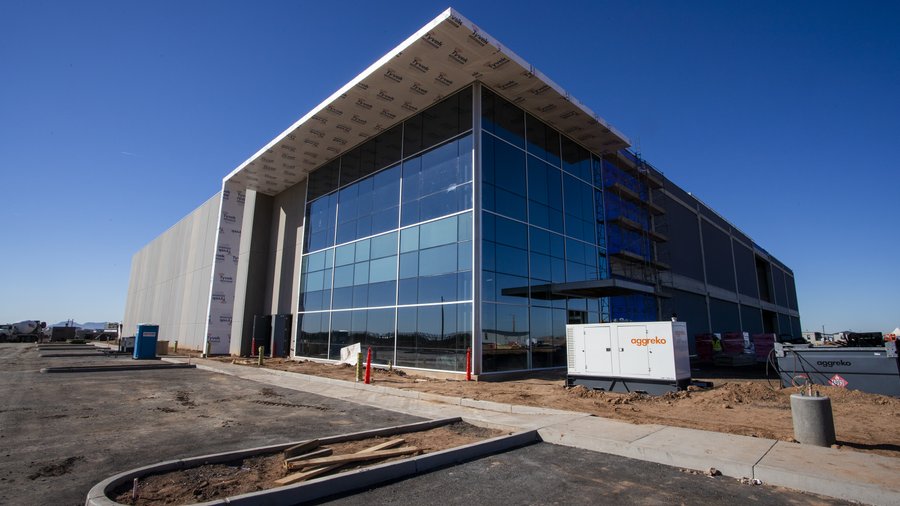
Phoenix is the second largest data center market in North America by absorption, trailing only Ashburn, Virginia.[¹] In May 2024, Microsoft paid $258 million in all cash for 283 acres in El Mirage, structured across two transactions on a single day.[²] By late 2025, the company had quietly added another 280 acres in the same submarket. The pattern is not isolated.
What the hyperscalers are doing
Combined, the five largest hyperscalers, including Amazon Web Services, Microsoft, Meta, Alphabet, and Apple, invested roughly $350 billion in data center and supporting infrastructure in 2025 and plan to deploy approximately $650 billion in 2026.[³] Microsoft alone is projected to spend $100 to $120 billion on capital expenditures in 2026, with the majority directed toward US data centers and AI infrastructure. The Arizona Republic identified 71 data center campuses planned or operating in Maricopa County.[⁴]
The West Valley, El Mirage, Goodyear, Mesa, and Avondale, has become the preferred corridor. Vantage Data Centers is investing over $1.5 billion in a single Goodyear campus. Prime Data Centers selected Avondale citing power costs 16 to 18 percent below national averages. Google's Mesa facility uses no water for cooling, a deliberate response to the regional constraint.
Why this matters to capital allocators
Lauren Rosin notes that hyperscaler land acquisition does not stay contained to the parcel they purchase. Three downstream effects are now visible:
Land basis resets in surrounding submarkets. When Microsoft pays $258 million for 283 acres, the comparable per-acre figure becomes the new floor for every transaction within a several-mile radius for the next 24 months.
Industrial-to-residential demand transfer. Each data center campus generates direct construction employment, then permanent technical staffing. Both populations need housing within commuting distance.
Utility and zoning intensifies on every adjacent parcel. Arizona Corporation Commission decisions on large-load tariffs, water surcharges proposed at one cent per gallon, and Maricopa County zoning revisions are reshaping what gets built and where.[⁵]
The investor read
According to Lauren Rosin, the play for individual investors is rarely the data center site itself. It is the supporting infrastructure: workforce housing, build-to-rent communities sized for technical professionals, and small-format industrial near power-rich corridors. The hyperscalers are pricing the land. The downstream demand is where most portfolios actually capture yield.
The risk: data center water and power debates at the state legislature could slow approvals. Hobbs has proposed surcharges; Republican lawmakers warn of investment chill. Capital deployed now should price the regulatory variable, not assume it.
Bottom line
When Microsoft buys 563 acres in a single submarket within 18 months, the signal is that the curve is steep and ongoing. The wealth opportunity is sitting two streets over.
Footnotes
- Daily Independent, "AI is taxing Arizona power, water and residents," November 4, 2025. https://www.yourvalley.net/stories/ai-taxing-arizona-power-grid-water-supply,505251
- Arizona Technology Council, "Microsoft acquires nearly 300 acres for data center growth in El Mirage." https://www.aztechcouncil.org/microsoft-buys-land-el-mirage-data-center/
- Commercial Property Executive, "Who's Funding the Data Center Boom?" March 4, 2026. https://www.commercialsearch.com/news/whos-funding-the-data-center-boom/
- Orion Investment Real Estate citing Arizona Republic analysis, February 4, 2026. https://www.orionprop.com/topfive/data-centers-guzzle-arizonas-water-and-power-we-calculated-how-much/
- AZFamily, "Data centers aren't the water villains you think they are," February 25, 2026. https://www.azfamily.com/2026/02/26/data-centers-arent-water-villains-you-think-they-are-environmentalist-says/